
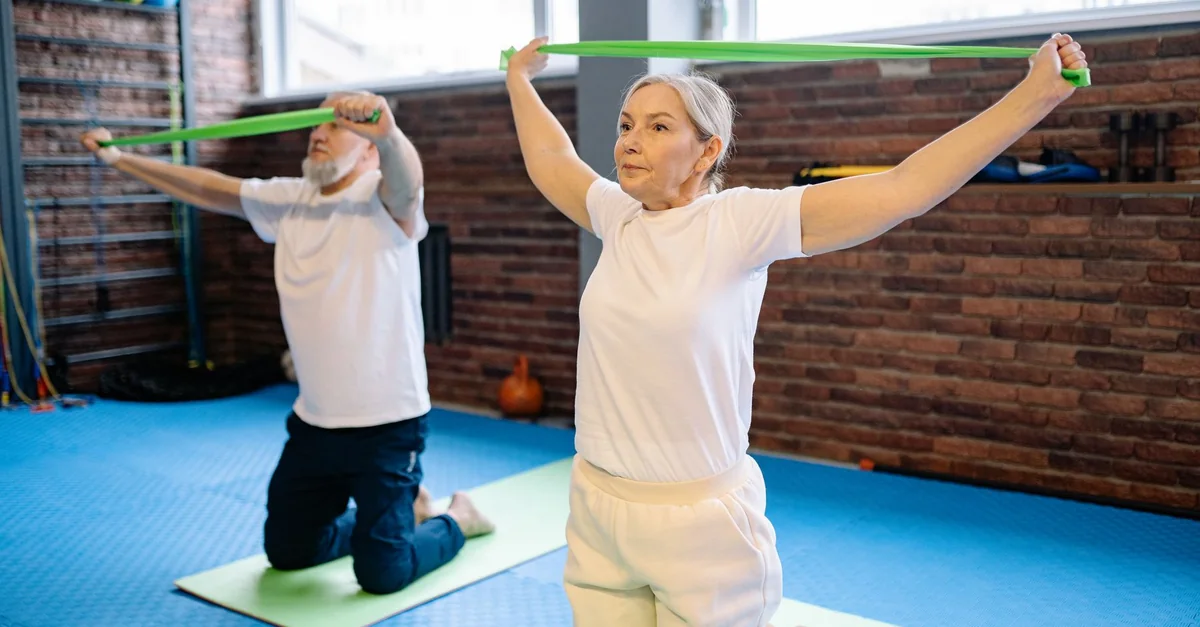
New research links aging to declines in balance, trunk stability, mobility, and hip strength. Here’s what to make of it.
Why this matters
If you’ve noticed that you don’t feel as steady on your feet as you once did, you’re not imagining it. A new observational study published in Nature adds to a growing body of evidence that aging is associated with changes in how our bodies maintain balance and move through the world.
These aren’t just abstract concerns. Declines in balance and mobility can affect everyday activities—from climbing stairs to carrying groceries—and are linked to a higher risk of falls, which can have serious consequences for older adults. Understanding what changes and why is the first step toward staying active and independent.
What the study found
The study, which was observational, looked at how aging relates to several key physical functions. The researchers found that older age was linked to declines in whole-body dynamic balance—your ability to maintain stability while moving—and trunk stability, which is the control of your torso and core.
They also observed associations with reduced functional mobility (the ability to move around efficiently) and decreased hip strength. These are all interconnected: your hips and trunk are central to balance, and when they weaken, everyday movements can become more challenging.
How to interpret the findings
It’s important to note that this was an observational study, not a clinical trial. That means it can show links, but it cannot prove that aging directly causes these declines. The source material doesn’t specify the sample size, the methods used, or whether the researchers controlled for other factors like physical activity levels or chronic conditions.
So while the findings are consistent with what many people experience, they don’t tell us exactly how much decline to expect or whether it’s inevitable. Aging is a complex process, and many factors—including genetics, lifestyle, and environment—play a role. The study also doesn’t suggest that these changes can’t be slowed or even partially reversed with appropriate interventions.
Practical next steps
Even though this study doesn’t prescribe specific exercises, its findings highlight areas worth paying attention to: balance, trunk stability, mobility, and hip strength. You can talk with your doctor or a physical therapist about assessments and activities that target these areas.
Simple habits like staying physically active, practicing balance exercises (such as standing on one foot near a support), and incorporating strength training for your legs and core may help. Always check with a healthcare professional before starting a new exercise routine, especially if you have health concerns.
The takeaway isn’t to worry, but to be proactive. By understanding how aging can affect your body, you can take steps to maintain your independence and quality of life for years to come.
Three things to remember
- Aging linked to declines in balance, trunk stability, mobility, and hip strength.
- Observational study shows associations, not proof of cause and effect.
- Talk to your doctor about ways to assess and support your balance.
How to interpret it
Historical Biophysics & Lineage
The modern preprint’s observational data on age-related declines in balance, trunk stability, and hip strength mechanistically connect to Hellebrandt’s early demonstration that postural control is a dynamic, feedback-driven process, and to Collins and De Luca’s later quantification of the stochastic and feedback components of sway. Aging reduces proprioceptive acuity, vestibular function, and muscle spindle sensitivity, which are the sensory inputs that drive the corrective micro-adjustments Hellebrandt described. Collins and De Luca’s open-loop (short-term) and closed-loop (long-term) control phases are differentially affected by age: the open-loop phase lengthens and the closed-loop corrective efficiency diminishes, leading to increased sway and reduced trunk stability. Hip strength decline, as measured in the preprint, directly reduces the ability to generate the corrective torques needed for closed-loop control, thereby linking muscle power to the neural control mechanisms identified in the historical work.
Source
This analysis is based on Understanding the effects of aging on whole-body dynamic balance, trunk stability, functional mobility, and hip strength from Scientific Reports. Read the original report for full context.
Health note: This article is for informational purposes only and is not a substitute for professional medical advice. Always consult a qualified healthcare provider with any questions about your health.