
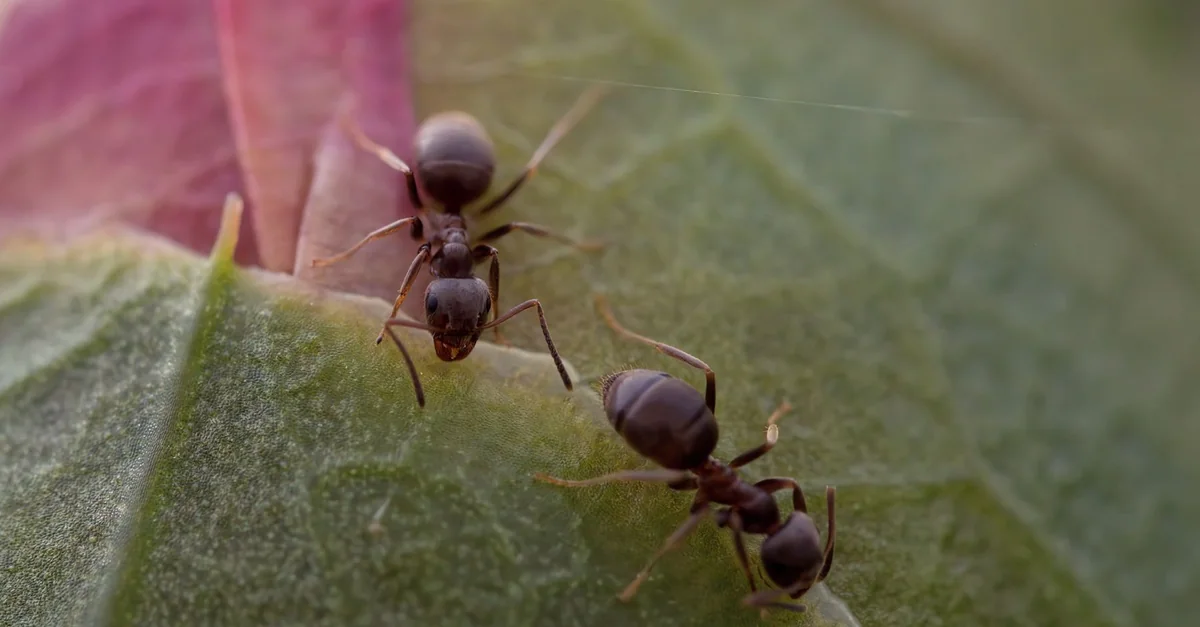
A new study of 18 Australian ant species shows that body size predicts how long workers live, but not how they age or how they die from heat. The findings challenge size-based vulnerability indices and point to circadian biology and evolutionary lineage as key climate-relevant axes.
Why this matters
For decades, the rate-of-living theory—Raymond Pearl’s 1928 proposition that metabolic rate, scaling with body size, dictates lifespan—has shaped our understanding of aging across species. This new preprint tests that assumption by decomposing mortality into three distinct axes: lifespan duration, senescence trajectory, and thermal vulnerability. The results are a clear warning: a single metric like body size cannot capture the complexity of aging or climate vulnerability.
In an era of rising global temperatures, knowing which species—and which individuals—are most at risk is critical. If thermal sensitivity is decoupled from body size, as this study suggests, then conservation and climate adaptation strategies based solely on size will misrank taxa. The same logic may apply to human health: our own vulnerability to heat and aging may not be predicted by simple physiological proxies.
What was found
The researchers conducted paired field-laboratory survival assays on 1,148 workers from 18 Australian ant species, amassing 2,363 cohort-day observations. They found that body size significantly predicted lifespan duration (Cox HR = 0.67, p = 0.002), meaning larger ants lived longer. However, colony size and the size-temperature interaction had no detectable moderating effect (p = 0.60 and p = 0.72, respectively).
Senescence trajectory—how mortality accelerates with age—was not correlated with body mass (Spearman p = 0.32) but was strongly associated with circadian niche. Matinal species, active in the early morning, showed the steepest senescence (Kruskal-Wallis p = 0.009; matinal vs. crepuscular p = 0.002). Thermal hazard plateaued above 20°C (Delta AIC = -38, p < 0.001), but Rhytidoponera ants exhibited elevated thermal sensitivity above that plateau, dying 5% faster per degree Celsius (p = 0.015).
Circadian regime and lineage identity were strongly collinear (Cramer’s V = 0.85), making it difficult to separate their effects. A weak but significant size-foraging-rate interaction (LRT p = 0.014) suggests ecological context may modulate the size-longevity relationship, but intrinsic physiology remains the most parsimonious explanation.
How to interpret it
The size-longevity correlation aligns with Pearl’s rate-of-living theory: smaller ants have higher mass-specific metabolic rates, which may accelerate cellular damage and shorten lifespan. Yet the decoupling of senescence and thermal sensitivity from body size reveals that metabolic rate is not the sole driver. The thermal plateau above 20°C reflects thermodynamic limits on enzyme kinetics and membrane stability, as Alexis Romanoff noted in 1944. Circadian niche may modulate oxidative stress via activity timing, linking to the molecular clock’s regulation of antioxidant genes.
The collinearity between circadian regime and lineage complicates causal inference. It is possible that the circadian pattern is a phylogenetic artifact, or that lineage-specific physiology (e.g., cuticle properties, metabolic efficiency) drives both activity timing and senescence. The weak size-foraging interaction hints that ecological factors like predation risk can modulate intrinsic physiology, but the dominant size effect supports a metabolic mechanism.
This study is observational and based on a preprint that has not yet undergone full peer review. The findings are specific to 18 Australian ant species and may not generalize to all social insects. Still, the decomposition of mortality into independent axes is a methodological advance that could inform future research on aging and climate vulnerability.
Practical next steps
For researchers, this study underscores the need to measure multiple mortality axes separately. Size-based vulnerability indices should be replaced or supplemented with metrics that capture circadian niche and lineage-specific thermal sensitivity. Future work should aim to disentangle circadian regime from lineage, perhaps by manipulating activity patterns in controlled environments.
For conservationists, the elevated thermal sensitivity of Rhytidoponera above 20°C is a red flag. Protecting these ants from heat waves may require habitat management that provides thermal refugia, such as shaded microhabitats. The plateau effect suggests that moderate warming may be tolerable, but exceeding a threshold could trigger rapid mortality.
For the healthspan-minded reader, the lesson is that aging is not a single process. Just as ant mortality is decomposed into duration, senescence, and thermal vulnerability, human aging involves distinct biological pathways—mitochondrial dysfunction, cellular senescence, and stress responses—that may respond differently to interventions. Understanding these axes separately is key to developing targeted strategies for healthy aging.
Three things to remember
- Body size predicts ant lifespan, but not aging or heat death.
- Circadian niche and lineage drive senescence and thermal sensitivity.
- Size-based vulnerability indices may misrank climate risk.
Source
This analysis is based on Body size predicts how long ant workers live - but not how they age or how they die from heat from arXiv q-bio. Read the original report for full context.
Health note: This analysis is based on a preprint that has not been peer-reviewed. The study is observational and limited to 18 Australian ant species; findings may not generalize to all social insects or to humans. No clinical recommendations are implied.