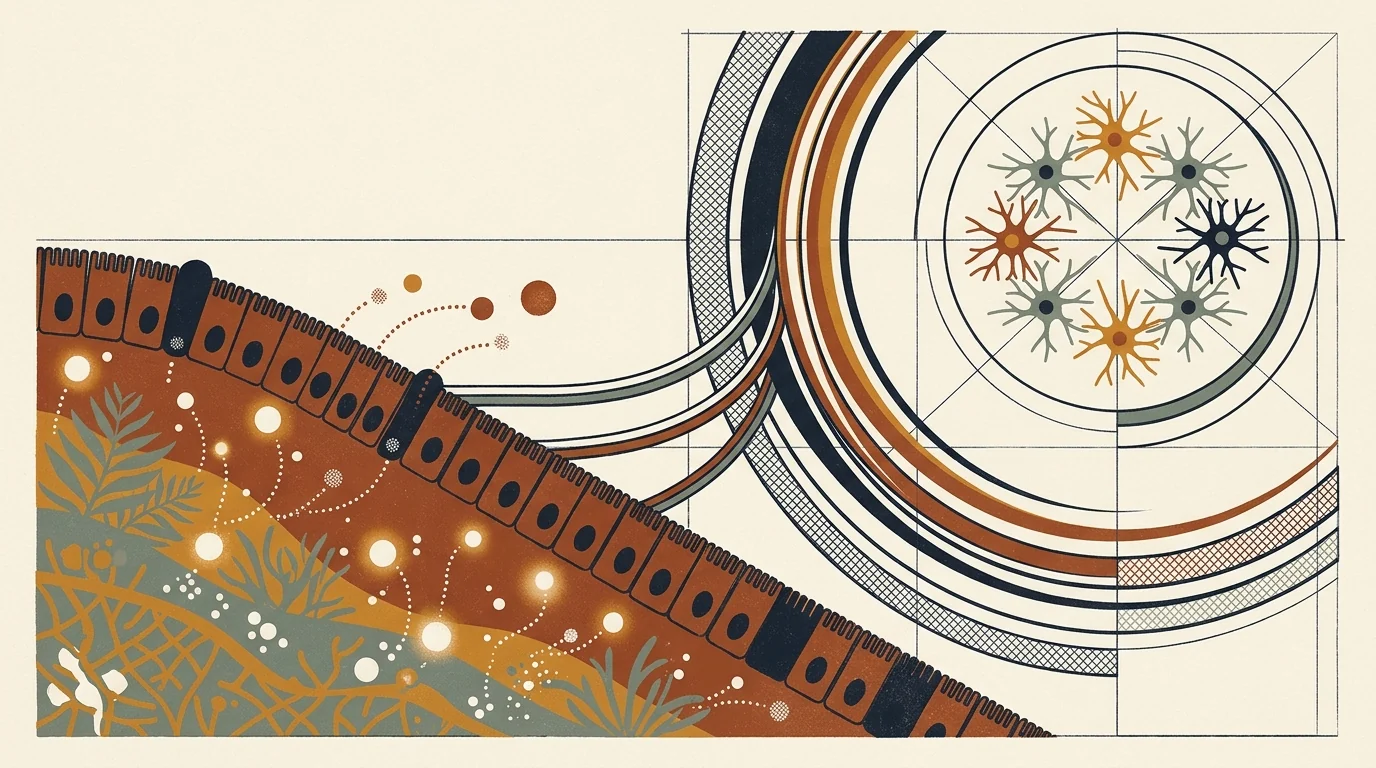
Nutrients direct immune cell maturation and neural signaling through microbial chemical messengers, offering new insights into neurodevelopment and age-related brain decline.
The immune system at the neural frontier
The central nervous system was long viewed as a fortress isolated behind the blood-brain barrier, shielded from the inflammatory skirmishes of the peripheral body. Modern immunology has dismantled this view, revealing that the brain continuously listens to distant cellular signals. Chief among these signal networks is the gut-brain-immune axis, a multidirectional loop connecting intestinal microbes, resident immune populations, and neural circuits.
A central puzzle in neurobiology is how routine dietary inputs can fundamentally alter the state of remote brain tissue. Nutritional imbalances are frequently linked to abnormal neurodevelopment and neurodegenerative conditions, yet the precise pathways connecting a digested meal to central nervous system immunity remain complex. Understanding this communication network requires tracing how diet alters microbial chemistry, which in turn directs immune function across a human lifespan.
Chemical messengers of the microbial ecosystem
A comprehensive synthesis of gut-brain-immune research reveals that nutrition actively dictates the chemical outputs of the gut microbiome. In early life, specific compounds like human milk oligosaccharides select for beneficial microbial strains. These microbes produce metabolic byproducts that tune early immune responses, promote anti-inflammatory microglia states in the brain, and enhance synaptic plasticity within the hippocampus.
As the gut ecosystem matures, its residents process dietary fibers, amino acids, and digestive fluids into short-chain fatty acids, tryptophan derivatives, and secondary bile acids. These small molecules leave the intestine to direct the maturation of resident microglia and astrocytes. Peripheral immune cells, particularly CD4 T cells residing in or migrating through the meninges, respond to these microbial signals by releasing cytokines such as IL-4, IFNγ, and IL-17A, directly modulating local neuronal behavior.
This dynamic chemical dialogue mirrors early insights by Élie Metchnikoff, who posited over a century ago that microbially modified nutrients govern systemic physiology and biological aging. Modern work refines this intuition, demonstrating that dietary metabolites actively direct synaptic pruning, adult neurogenesis, and structural brain maintenance.
Bioenergetic shifts and neuroinflammatory transitions
The underlying physical mechanisms rely on metabolic state changes within immune and glial cells. Microbial-derived short-chain fatty acids act as active signaling molecules and bioenergetic substrates. When these metabolites dock onto cell-surface receptors or enter metabolic pathways, they alter microglial energy production and gene expression. Healthy bioenergetics keep microglia in a homeostatic state, allowing them to quietly clear debris and sculpt functional synapses.
When nutritional inputs are chronically imbalanced, this metabolic equilibrium collapses. Microglia and infiltrating lymphocytes undergo a bioenergetic shift, adopting disease-associated phenotypes that produce chronic elevated inflammation. In disorders like Multiple Sclerosis, Alzheimer’s disease, and autism spectrum disorders, this loss of metabolic regulation accelerates tissue pathology. In the aging brain, dietary metabolites counter inflammaging by sustaining mitochondrial efficiency, helping maintain the essential cellular energy required for active neural maintenance.
Boundaries of current evidence and future directions
While mapping these metabolic pathways provides a clear theoretical framework for gut-brain crosstalk, critical empirical gaps remain. The current body of literature relies heavily on observational synthesis, surrogate cell markers, and preclinical animal models. These models demonstrate functional pathways but cannot yet pinpoint exact clinical dosages, standardized dietary protocols, or therapeutic outcomes for human patients.
Translating these mechanistic insights into targeted clinical strategies will require long-term human trials that measure direct neural tissue responses alongside microbial sequencing. Establishing how specific dietary patterns shape individual immune phenotypes will be essential before microbial metabolites can be reliably targeted to preserve cognitive health span or treat neurodegenerative disease.
Key takeaways
- Microbial metabolites convert dietary inputs into chemical signals that regulate brain microglia, astrocytes, and central nervous system T cells.
- Early-life nutrients like human milk oligosaccharides foster anti-inflammatory microglia polarization and support hippocampal synaptic plasticity.
- Balanced dietary metabolites help counter age-related bioenergetic shifts in lymphocytes and microglia, mitigating chronic neuroinflammation.
Source
Reported from Nutritional regulation of gut-brain immune crosstalk across the lifespan. (PubMed Inner Garden (SCFA Signaling & Gut-Brain Barrier)).
Evidence note: This evidence rests on a high-level narrative review and does not establish specific clinical intervention protocols or definitive human therapeutic dosages.