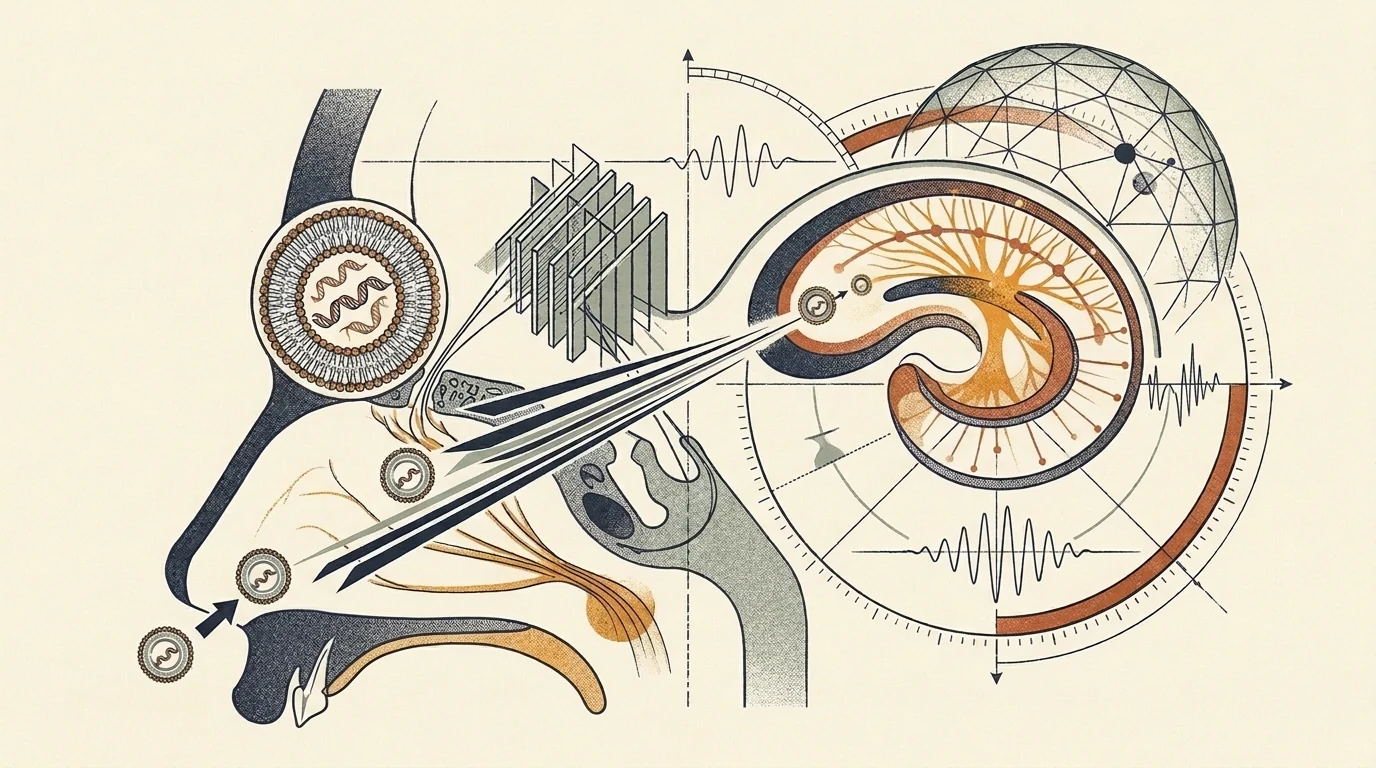
University of Sydney researchers engineered lipid-encapsulated mRNA nose drops that travel through nasal pathways to reverse spatial memory deficits and shield transgenic mice from Alzheimer’s pathology.
Crossing the blood-brain barrier remains a central obstacle in neurotherapeutics, as tight junctions between cerebral endothelial cells block large molecular therapies from entering brain parenchyma. To circumvent this wall, University of Sydney researchers engineered nasal drops that send lipid nanoparticles along the olfactory nerve pathway straight into forebrain tissue. Once inside, the messenger RNA instructs host neurons to synthesize targeted therapeutic proteins. When given to aged rodents, this intranasal delivery restored their ability to navigate and recall complex spatial mazes. In transgenic mouse models of Alzheimer’s disease, the mRNA drops halted the progressive loss of spatial memory that typically accompanies neurodegeneration.
The platform repurposes the lipid nanoparticle shells refined for mRNA vaccines, modifying their chemical composition to target neural circuitry rather than immune cells. By traveling directly through the nasal mucosa into the brain, the formulation delivers genetic instructions without entering systemic blood circulation or requiring invasive brain surgery. Although these rodent trials demonstrate that targeted mRNA expression can rescue memory circuits, the platform remains in early preclinical development. Human trials are necessary to verify that lipid nanoparticles can safely cross human nasal tissue, achieve therapeutic protein production across a far larger brain volume, and halt neurodegenerative disease over years rather than weeks.
Key takeaways
- Lipid nanoparticles slip through olfactory mucosa to deliver messenger RNA directly into forebrain neurons, bypassing the restrictive endothelial junctions of the blood-brain barrier.
- The genetic treatment restored spatial navigation performance in senescent mice and halted cognitive decay in transgenic Alzheimer’s models.
- The delivery vehicle adapts lipid formulation principles from mRNA vaccines to synthesize therapeutic proteins directly within vulnerable neural circuits.
Source
Reported from Inspired by ‘Flowers for Algernon,’ experimental nose drops improve memory in mice (Medical Xpress Healthy Aging).
Evidence note: These findings are limited to rodent models; human clinical trials must confirm whether lipid nanoparticles can penetrate thicker human nasal mucosa, achieve therapeutic expression across a larger brain volume, and demonstrate long-term safety.