← All briefs general wellness · emerging · · 1 min read Cannabinoid receptor 2 activation locks breast cancer cells into a differentiated, therapy-sensitive state
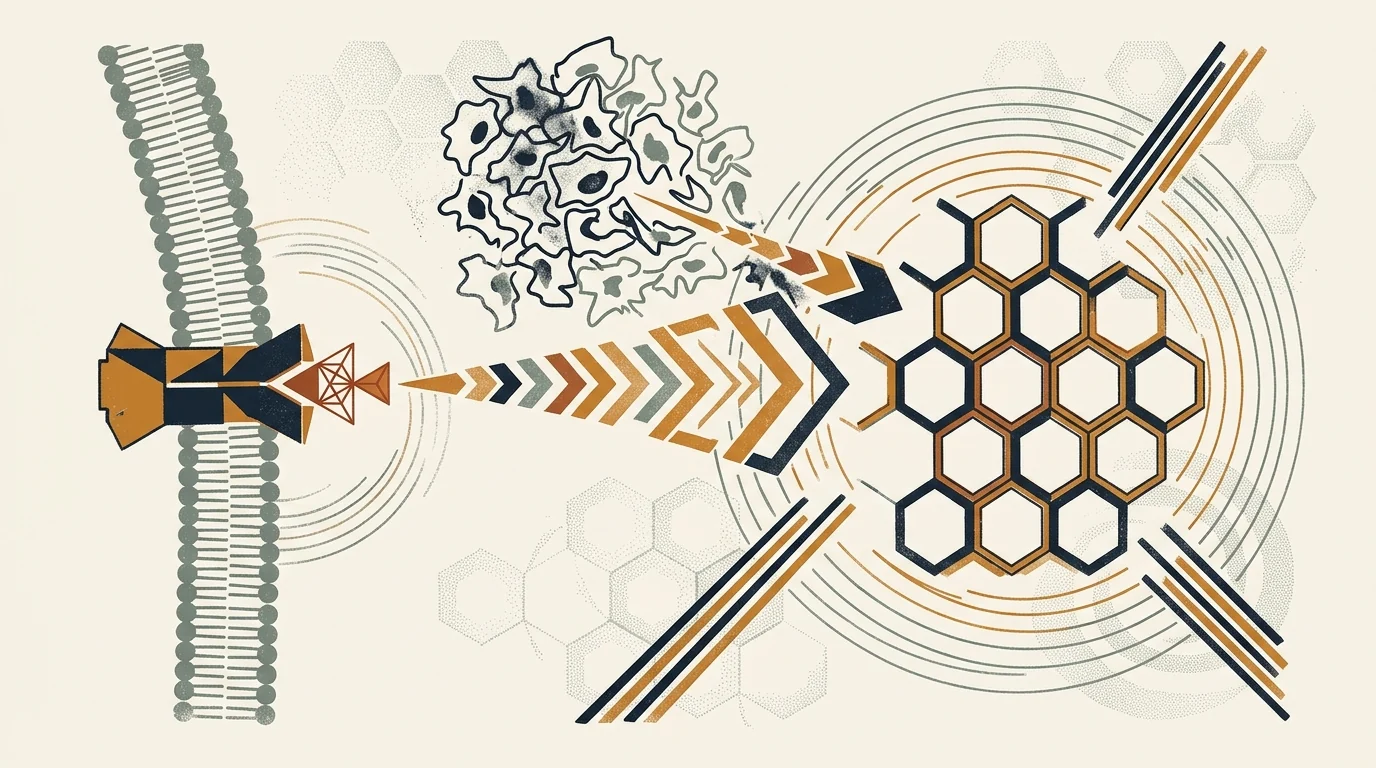
Editorial lithograph · Agewell Brief Visual Desk Plate note Plate — Low-dose cannabinoid receptor 2 activation triggers an epigenetic differentiation switch that constrains cellular plasticity and restores endocrine sensitivity.
Brief, low-dose CB2R agonists trigger an epigenetic switch that curbs plasticity and boosts tamoxifen response in organoid models.
Three things to remember
- CB2R activation induces basal-to-luminal transition, reducing self-renewal and invasiveness.
- Differentiation persists under stress conditions that normally promote dedifferentiation.
- Epigenetic stabilization enhances tamoxifen sensitivity and limits resistant clone emergence.
Source
This signal is based on CB2R-induced differentiation epigenetically restrains cancer plasticity enabling adaptive therapy from biorxiv. Read the original report for full context.
Health note: Preclinical organoid study; human efficacy and safety not established.