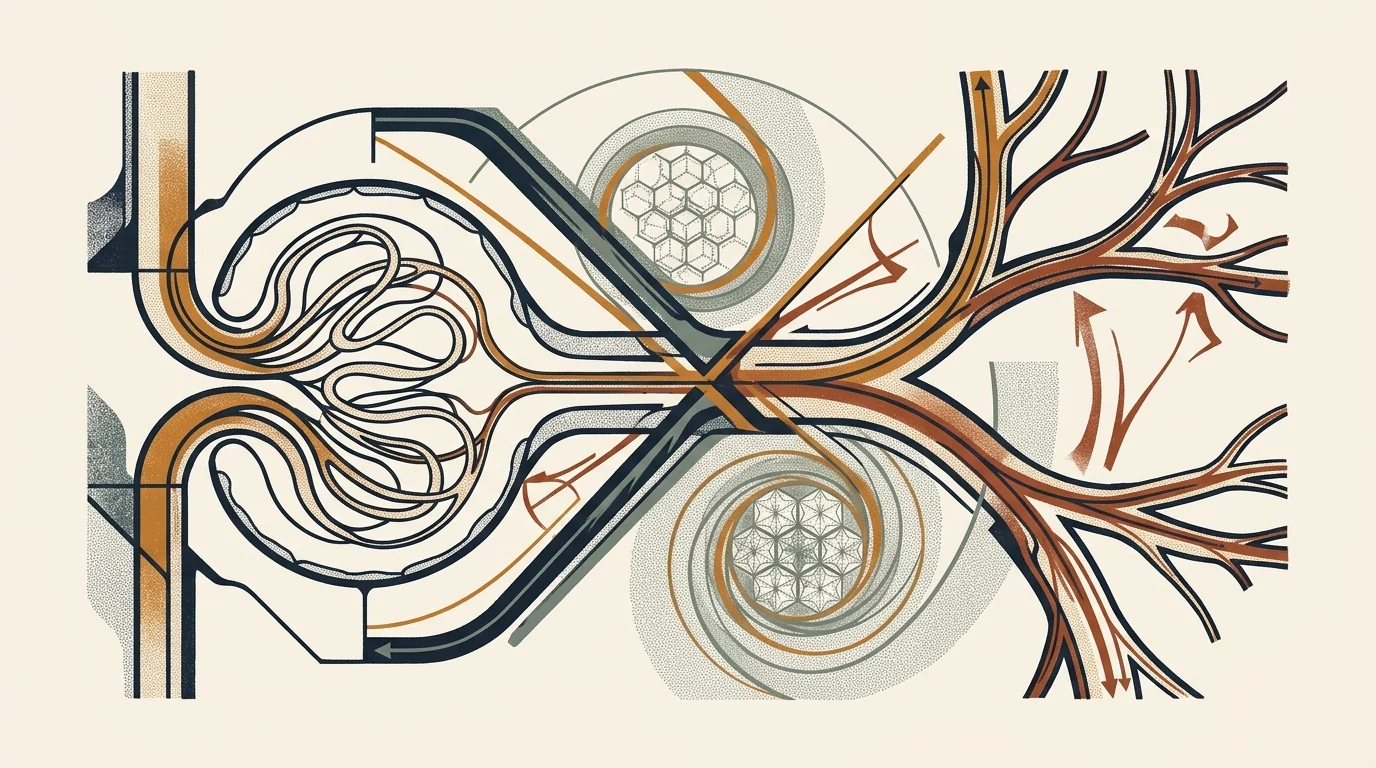
A new framework links chronic kidney disease to accelerated vascular aging, uniting structural remodeling with conventional frailty models to explain systemic vulnerability.
Chronic kidney disease serves as an intense engine of biological aging, driving premature cardiovascular decay and systemic physical decline long before chronological years accumulate. Traditional geriatric assessments focus narrowly on muscle performance and functional weakness, completely bypassing the arterial mechanics and microvascular decay underlying whole-body vulnerability. Conversely, cardiovascular medicine studies arterial stiffness in isolation, ignoring how failing kidneys accelerate the erosion of vascular resilience. To close this gap, researchers propose vascular frailty as a unifying biophysical framework that merges structural arterial remodeling and functional vascular impairment with classical frailty scoring. Within this model, the steady loss of vascular reserve—the capacity of blood vessels to dynamically dilate, buffer pressure, and perfuse delicate tissues under metabolic stress—acts as the primary driver of systemic collapse.
This conceptual integration positions the kidney not merely as a filtration organ, but as a master sensor and amplifier of systemic vascular aging. By combining advanced vascular imaging, physiological stress testing, and molecular biomarker profiling with standard physical frailty metrics, clinicians gain a multidimensional lens to map biological vulnerability in chronic kidney disease. Operationalizing this framework offers a potential roadmap to move beyond simple functional scoring toward capturing the actual physical decay of the circulatory tree. However, this synthesis remains a theoretical model supported by conceptual integration rather than definitive trial outcomes, meaning its precise incremental prognostic value and utility for guiding individualized clinical management still await rigorous validation in future longitudinal studies.
Key takeaways
- Chronic kidney disease accelerates biological aging, locking physical frailty and premature cardiovascular decay into a single destructive feedback loop.
- Conventional frailty metrics evaluate functional muscle performance while missing the underlying structural and functional degradation of the arterial tree.
- Vascular reserve and resilience serve as biophysical bridges that connect arterial aging directly to systemic vulnerability and functional collapse.
Source
Reported from Vascular frailty: A new paradigm linking biological aging, gero-nephrology, and vascular medicine. (PubMed).
Evidence note: Because this study is a conceptual review proposing a new theoretical framework, its proposed measures lack established prognostic thresholds and require longitudinal validation in clinical cohorts.