
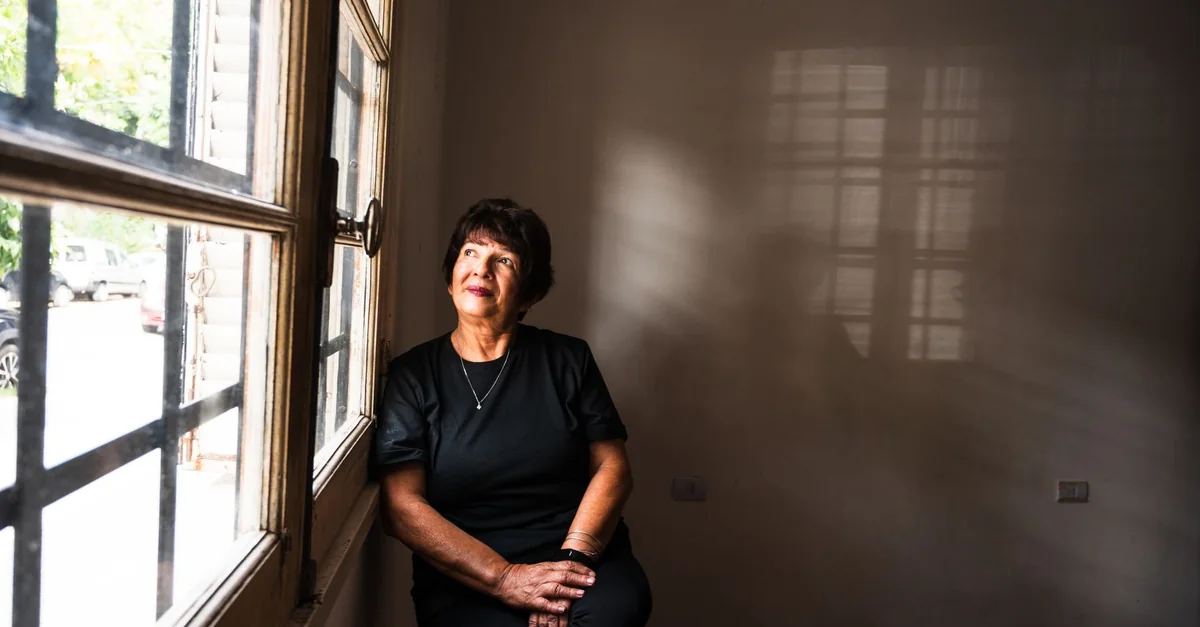
A new cross-sectional study of 6,106 Chinese empty-nest elders finds poor sleep triples anxiety risk—and reveals how physical exercise and social participation act as biological mediators.
Why this matters
Sleep is not a passive off-switch. It is an active, energy-intensive state where the glymphatic system flushes metabolic waste, synaptic homeostasis is restored, and mitochondrial networks undergo quality control. When sleep fragments or shortens, these processes degrade—raising allostatic load and tipping the nervous system toward hyperarousal. Anxiety, in turn, is a state of persistent threat signaling, driven by amygdala hyperactivity and prefrontal down-regulation. The two are locked in a bidirectional loop: poor sleep fuels anxiety, and anxiety fragments sleep.
For older adults living alone—the ‘empty-nest’ population—this loop tightens. Social isolation and reduced physical activity compound the neurobiological strain. The new study, drawn from the Chinese Longitudinal Healthy Longevity Survey, quantifies the stakes: poor sleep quality was associated with a 3.23-fold higher odds of anxiety, while short sleep duration carried a 1.34-fold risk. These are not trivial numbers. They point to modifiable levers that sit squarely within an individual’s control.
What was found
The analysis included 6,106 Chinese adults aged 65 and older living in empty-nest households. Among them, 593 (9.7%) reported anxiety symptoms. Using multivariable logistic regression, the researchers found that poor sleep quality was the strongest independent risk factor for anxiety (OR = 3.23, 95% CI: 2.62–4.01). Short sleep duration—typically under six hours—also independently predicted anxiety (OR = 1.34, 95% CI: 1.04–1.74). Notably, long sleep duration showed no significant association.
Mediation analyses revealed two distinct pathways. Physical exercise significantly mediated the link between sleep quality and anxiety, and between long sleep duration and anxiety. Social participation mediated the associations of both short and long sleep duration with anxiety. In plain terms: part of the reason poor sleep leads to anxiety is that it reduces the likelihood of exercising and engaging socially—and those behaviors, in turn, buffer against anxiety. The bootstrap confidence intervals excluded zero, indicating robust mediation effects.
How to interpret it
Historical Biophysics & Lineage
The modern preprint’s finding that poor sleep triples anxiety risk in empty-nest elders is mechanistically grounded in Borbély’s two-process model: fragmented or short sleep increases homeostatic sleep pressure (Process S) and disrupts circadian alignment (Process C), impairing glymphatic clearance and synaptic homeostasis. This chronic sleep debt elevates allostatic load, which, as Karatsoreos showed, leads to prefrontal dendritic atrophy and amygdala hypertrophy—exactly the neural signature of anxiety. The study’s identification of physical exercise and social participation as mediators aligns with these pathways: exercise enhances glymphatic function and neuroplasticity, while social engagement buffers stress-induced amygdala reactivity, thereby reducing the sleep-anxiety bidirectional loop.
Ancestral parallel: Traditional hunter-gatherer lifestyles inherently combined high daily physical activity (walking, foraging) with strong social cohesion and communal sleeping patterns, which naturally synchronized circadian rhythms and maintained robust sleep architecture. This ancestral pattern—movement during daylight and social bonding at dusk—optimized the homeostatic and circadian processes described by Borbély, preventing the chronic sleep debt and amygdala hyperarousal seen in sedentary, isolated modern elders. The study’s findings echo this: physical exercise and social participation are not just lifestyle choices but biological levers that restore ancestral sleep-wake rhythms and neuroendocrine balance, reducing anxiety risk.
This is a cross-sectional study, so causality cannot be inferred. The arrow could point the other way—anxiety might disrupt sleep, and anxious individuals may withdraw from exercise and social life. The authors controlled for multiple confounders, but residual confounding remains. Self-reported sleep and exercise introduce measurement bias. And the sample is specific to Chinese empty-nest elders, so generalizing to other populations requires caution.
Yet the biological plausibility is strong. Physical exercise enhances mitochondrial biogenesis and neuroplasticity, increasing brain-derived neurotrophic factor (BDNF) and improving stress resilience. Social participation engages the default mode network and oxytocinergic pathways, dampening sympathetic arousal. Both are known to improve sleep architecture. The mediation findings suggest that sleep, exercise, and social connection form a triad—each reinforcing the others. From a biophysical standpoint, this aligns with the work of pioneers like Mae-Wan Ho, who described living tissues as quantum coherent liquid crystals, where energetic flow depends on the integrity of the whole matrix. Disrupted sleep, inactivity, and isolation are not separate problems; they are fractures in the same bioenergetic web.
Practical next steps
For the empty-nest elder—or anyone living alone—the takeaway is not to obsess over sleep duration alone. Sleep quality matters more. The study found that poor sleep quality had a far stronger association with anxiety than short duration. So prioritize sleep hygiene: consistent timing, dark and cool environment, and avoiding stimulants in the evening. If sleep is short, don’t panic—focus on depth and continuity.
Second, treat physical exercise as a non-negotiable. Even moderate activity, like brisk walking or tai chi, can enhance mitochondrial function and neuroendocrine balance. The study suggests that exercise partially explains why good sleep protects against anxiety—so the two work synergistically. Third, maintain social participation. Whether it’s a community group, a phone call with a friend, or volunteering, social engagement is a biological signal that reduces threat perception. The mediation analysis shows that social participation buffers the anxiety risk from both short and long sleep.
Finally, recognize that these are modifiable factors. You are not a passive victim of your biology. By deliberately engineering your environment—your sleep, your movement, your social connections—you can shift the allostatic load. The study’s findings are a reminder that the body is a coherent system, and small interventions in one domain ripple through the others.
Three things to remember
- Poor sleep quality tripled anxiety odds in empty-nest elders.
- Short sleep raised anxiety risk by 34%.
- Exercise and social participation mediated the sleep–anxiety link.
Source
This analysis is based on Association of Sleep with Anxiety in Chinese Empty-Nest Older Adults: The Mediating Roles of Physical Exercise and Social Participation from bioRxiv immunology and cell biology. Read the original report for full context.
Health note: Cross-sectional design; causality not proven. Self-reported measures may bias results. Findings may not generalize beyond Chinese empty-nest elders.