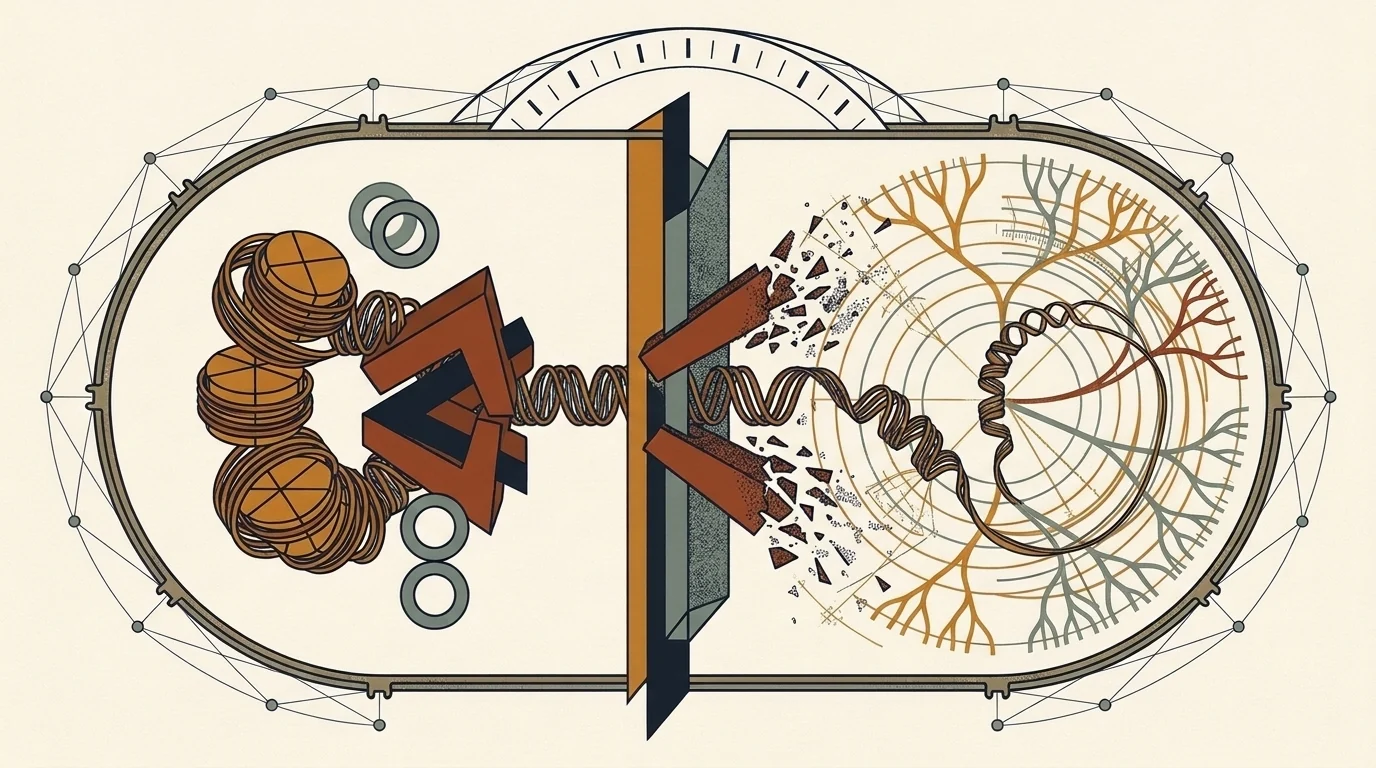
Researchers discover that aged mice accumulate repressive histone tags that freeze neuronal remodeling, and that genetically removing this molecular clamp restores memory capacity.
The silent circuitry of aging brains
Memory formation requires physical architecture to change. When an animal encounters a novel experience, neurons must rapidly transcribe immediate early genes, remodel dendritic spines, and wire new functional circuits. Yet, as brains age, this experience-dependent plasticity often grinds to a halt.
Decades ago, pioneering work by Eric Kandel established that long-term memory consolidation depends on active, inducible transcription. In aging tissues, however, cells frequently fail to mount this transcriptional response, leaving circuits locked in a rigid state despite repeated behavioral stimulation.
Single-cell tracking of repressive chromatin tags
To investigate why aged neurons lose their responsiveness, researchers deployed a quantitative single-event approach combined with fluorescence-activated cell sorting and RNA sequencing in mice. They focused specifically on the dorsal dentate gyrus, a key hippocampal region responsible for encoding new episodic memories.
The analysis revealed a distinct subpopulation of neurons in aged animals that accumulates high levels of the repressive histone modification H3K9me3. Driven by the methyltransferase enzyme Suv39h1, these H3K9me3-high neurons adopted a peculiar transcriptional profile, failing to deploy plasticity machinery while simultaneously upregulating baseline memory-stabilization programs.
Lifting the epigenetic brake on synaptic remodeling
To test whether this epigenetic condensation actively blocks neuronal communication, the investigators engineered a novel NucleuSynapse-Tag method to monitor activation and structural changes directly. When aged mice underwent behavioral stimulation, neurons packed with H3K9me3 failed to execute the expected activity-dependent gene expression and synaptic restructuring.
To determine if this block is causal rather than merely correlational, the team genetically inhibited Suv39h1 to clear the excessive repressive marks. Lowering the number of H3K9me3-high neurons successfully rescued behavioral memory performance in the aged mice, proving that the chromatin state acts as a physical barrier to cognitive function.
Boundaries of chromatin-targeted therapies
These findings pinpoint a precise regional and cell-type-specific epigenetic mechanism underlying age-related cognitive decline. By showing that a targeted molecular intervention can lift the chromatin clamp, the work highlights the therapeutic potential of modulating histone methylation enzymes.
Because these mechanistic experiments were conducted exclusively in murine models, considerable work remains to determine whether similar epigenetic locks accumulate in human brain tissue and whether they can be safely manipulated without disrupting broader genomic stability.
Key takeaways
- Aged mice accumulate a distinct subpopulation of dorsal dentate gyrus neurons characterized by high levels of the repressive histone modification H3K9me3.
- Driven by the methyltransferase Suv39h1, these chromatin-condensed neurons fail to transcribe essential plasticity machinery in response to behavioral stimuli.
- Genetically inhibiting Suv39h1 successfully clears the repressive histone marks and restores normal memory performance in aged animals.
Source
Reported from An H3K9me3high epigenetic state constrains neuronal activation and synaptic remodeling in the aged dentate gyrus (bioRxiv neuroscience, genetics, physiology).
Evidence note: Because these findings are based entirely on genetic and behavioral experiments in aged mice, they do not yet demonstrate clinical efficacy or establish a proven human therapeutic protocol.